
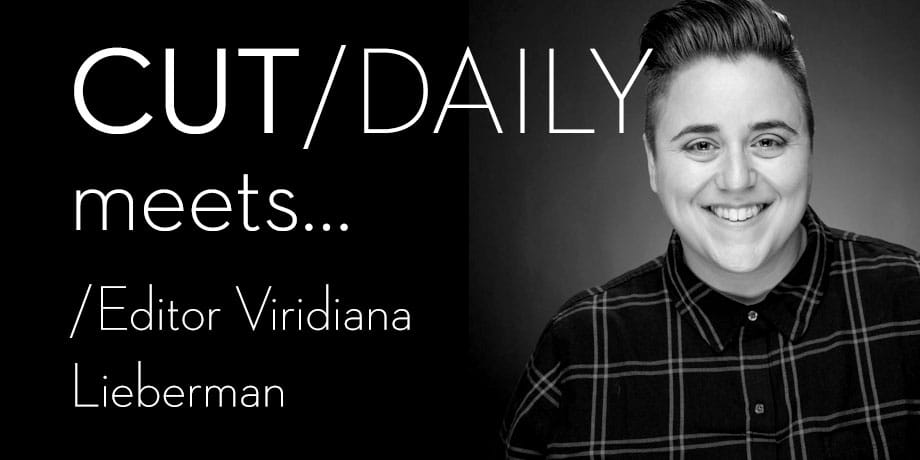
#488 – Cut/daily Meets... Editor Viridiana Lieberman
How do you craft a film like The Perfect Neighbour from 30 hours of a random jumble of sources cameras including police body cams, Ring doorbells, 911 call recordings and more?
With patience and attention to detail it seems.
Editor Viridiana Lieberman and Director Geeta Gandbhir's latest documentary collaboration is nominated for Best Documentary Feature at this year's Academy Awards and for good reason.
But what I loved most about everything Viridiana had to share was the poetic passion with which she shared it all.
Read on for an editorial pep-talk from a fellow editor who truly loves her craft.
Pushing form and approach into singular works is what I continue to endeavour to do with every project, while seeking out the humanity that connects us and can call to action to evoke change.
— Editor Viridiana Lieberman
You’ve described the raw materials on The Perfect Neighbor as a “thrilling challenge” of some 30 hours of body cams, dash cams, Ring cameras, 911 calls and canvassing interviews, all arriving in a chaotic, disordered state.
Practically, what did your first few weeks in the timeline look like—how did you set up the project so it was even possible to think creatively inside that chaos?
I just dove in. Thirty hours isn’t actually that much for a feature, but it came in every format imaginable: body cams, Ring cams, 911 calls, canvassing interviews interrogations...etc.
Premiere’s the best for that mess: drag everything in, no fuss, start watching.
Director Geeta Gandbhir, jokes that she was my first AE because she had originally strung it all out to discover the chronology because the files had varying information when it came to dates.
That enabled me to simply break it down by call and create a beefy kitchen-sink cut of sorts that I started to hone.
I didn’t multicam anything, I felt a compulsion to see everything on the timeline to make sure I was staying true to the evidence and that everything the audience sees and hears is what is actually happening in that moment.
Sometimes that meant layers upon layers of officers on the scene that would turn their cameras on and off at different times but all synced to the chronology.
The challenge was making sure each call was doing new work, building on one another, raising the tension while honoring the raw observation of this evidence that we felt an immense responsibility to discover the truth in.
The Perfect Neighbor has been called “a horror film in many ways,” in how it uses darkness, off‑screen space, and the limitations of body‑cam POV to generate tension.
When you and Geeta leaned into those thriller genre tools, what were the concrete editing decisions—shot duration, sound design, when to withhold context—that helped push the film in this direction?
There were two directives Geeta said early on that really drove the edit:
- root everything in the neighborhood
- that this feels like a horror film.
Rooting with the neighborhood meant that moments and angles were chosen to try and keep it personal and grounded, not based on the police and their procedures.
The horror aspect came into play with the tone and the simmering tension.
The cold open seeding where we’re headed and then the quiet discovery of peeling layers of this story as we build to that night.
That night is perhaps one of the heaviest hands in the genre play because we amplify momentum and the pulse, the ticking clock on Ajike’s life and the walls closing in as we approach this heartbreaking moment through the maximum state of sources we had in motion.
We didn’t force anything; we followed the footage and found the balance and pace to evoke that unsettling unpacking. Sound design was more about cleaning up the true sound of our sources but making sure we’re tied to whatever source we’re watching and listening to.
Of course the score had such a critical fingerprint on the approach. Tonal but specific, at times feeling vast and dynamic but continuing to feel personal and used very intentionally in ways to preserve the rawness of the bodycam footage.
Looking back at The Perfect Neighbor alongside your work on films like The Sentence, Lowndes County and the Road to Black Power, and Born to Play, what feels like the throughline in your editorial voice now?
Emotion leads, always.
Every scene is a building block of earning emotional revelations and connection.
Though these films are very different, the north star of my approach is always rooted in the personal and embracing observation and discovery for an audience. I strive to trust the audience and embrace attention to detail.
And more than anything to meet the story, the materials and the moment where it is. What can only this story, with this footage, and this team, at this time create?
Pushing form and approach into singular works is what I continue to endeavor to do with every project, while seeking out the humanity that connects us and can call to action to evoke change.
Is there anything about the way you approached this film—structure, restraint, relationship to subjects—that you think will permanently change how you cut from here on?
More than anything, this film gave me the confidence to trust my instincts.
We didn’t have a comp for this, it was one of the most pure processes I’ve ever experienced. Following the footage and trying things to see what feels right. And now I feel like I will take that into every project I have the privilege of being a part of.
That we start with truly looking at what we have and what that original intention was and finding the voice in that conversation. And perhaps most of all, trusting the process.
What was the most challenging aspect of this film editorially? And how did you overcome it?
The night of the event was certainly the most challenging.
All of our sources were in play, including the most police officers on the scene, so deciding:
- Where to be when
- How to compress time without straying from the truth of where people were at what moment
- How to feel the anxiety and build the pressure
- When to release it and take on a new form of pressure
- In the consequences, the reality, the emotions.
My first pass of that night was around forty minutes long.
As the entire film took shape, that helped me work inward on that night to understand the balance of it all, the structure of that night and how much time we would spend in each phase of it.
So it was a bit of working around it and then within to finally bring it where it needed to be.
What’s your daily work routine?
A majority of my editing journey has been working from home.
I treat it as if I’m going to an office though - getting up, getting ready and “commuting” those handful of feet to work mode.
Some days are highly productive, some feel less so but trusting the process has never failed me in meeting deadlines and feeling like my focus is where it needs to be.
Full disclosure, I have two little ones that certainly struck some growing pains in my old habits of overworking and I truly believe my hours are more productive with the boundaries I’ve had to accept for my family and my sanity rather than when I just charged all night until I was a heap of debris.
Sure I have my marathon sessions when I’m inspired but I never force things which ultimately not only creates the conditions for my best work but makes the process something I crave and love every second of.
What do you now know about your work that you wish you’d known when you first started?
When I was starting out, I would sprint at all costs to do a complete pass in almost a fine cut mode.
And then when I had to inevitably tear the roots on it, it was so painful.
I do believe in understanding a complete vision for a film to really work it and certainly love the moment all the clay is on the wheel to dream with but the truth is, every step counts.
Whether you’re cutting a few moments you know and working outward from there or starting from the beginning, that process of discovery is vital, you don’t have to know everything.
That’s the thrill, not knowing and discovering so embrace it.
What did your biggest professional failure teach you?
Those difficult times in my work taught me my limits. They taught me to ask for help.
I’m such a yes-person to a fault because I love what I do and I don’t want to miss out on being a part of films that I think are so powerful. But I’ve learned when I overcommit, I suffer and the work suffers.
It also doesn’t have to be all on me. What makes what we all do so special is collaboration.
I was such a purist in my early days, having to control everything and now I’m fuelled by learning from those around me and so inspired to share what I dream to do with them.
Folks talk about looking back and realising how every high and low in life connects and leads to where they are today - that’s absolutely me.
This film came to me after a hard stretch and I wouldn’t have been a part of it if that hadn’t happened. It all counts and trust the process, not just in your work, but in life.
What’s the #1 thing that has helped you shorten your craft’s learning curve?
I’ve been so lucky to work with directors who talk about big picture with me - tone, intention, hopes - but then give me the space to experiment. They invite my big swings and encourage our collaboration.
I don’t think that has to be contingent on the director, I think you can be honest about how you do your best work with whatever team you're working with.
Telling people what you do, what you hope to do and the type of work you dream of being a part of will open doors.
I think I spent too much time waiting to be invited to do the things I dreamed of doing when no one else truly knew what that was.
Say it so those invested in you can help you get there - that and you can keep hearing yourself say it to stay accountable to the journey you’re building.
What book has helped you the most over your career?
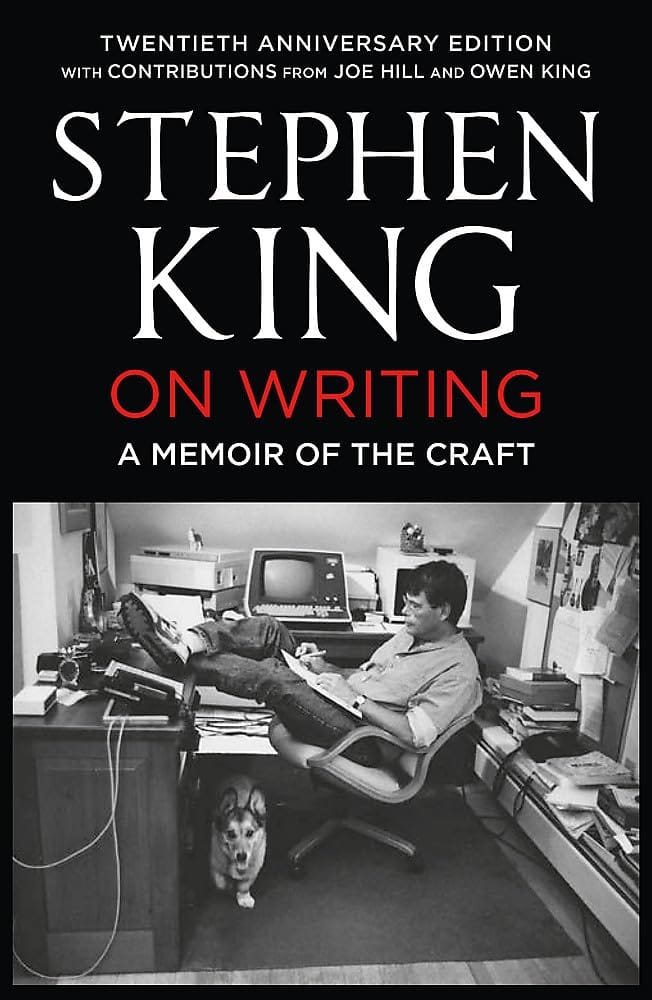
I don’t have one specific book to share but the books that influenced me most were books about writing (like On Writing by Stephen King) mainly because they inspired attention to detail, immersive sensory storytelling and character-driven focus.
Documentary is cinema, it is storytelling, it is narrative, and learning in the nuance of writing and world building has driven me to always seek an approach that feels just as riveting as any book or scripted film provides.
And your parting piece of advice?
Trust the process, it all counts.
Care about what you’re doing, how you do it and why you’re doing it.
It’s such an honor to do what we do and it holds great responsibility. Acknowledge that and embrace what you - and only you - can bring to it.
We’re not machines, we’re people and our voices as creatives and editors are a singular and special component to this wondrous world of filmmaking we live in.
Own it, evolve it, love it and keep pushing so we can all grow from each other.
Thanks so much Viridiana for this editorial masterclass!
So remember, it's an honour and a responsibility to cut daily.