
#488 – Cut/daily Meets... Train Dreams Editor Parker Laramie
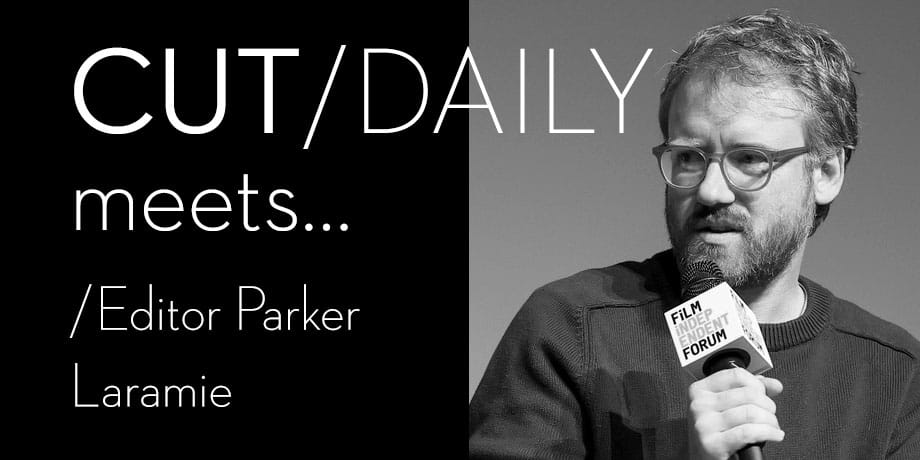
Editor Parker Laramie's latest project, Train Dreams is nominated for four Academy Awards including Best Picture.
Parker's previous credits include the excellent and three time Oscar nominated feature Sing Sing, the indie award winning documentary André is an Idiot and a host of the TV episodes, features, documentaries and shorts.
Parker has cut a little of everything and it seems like that strong mix of experiences helped him carve creative edits out of non-linear material.
What I appreciated most about everything Parker had to share was his honesty about his previous career errors, the creative challenges on Train Dreams and how he and Director Clint Bentley solved them in the edit.
In your Filmmaker interview you mentioned that so much of Train Dreams was about taking Denis Johnson’s “sweeping, unruly” novella and boiling it down to a tight emotional story, then pushing that focus even further in the cut.
How did you practically keep that emotional throughline on track inside the timeline when individual scenes or sequences were constantly being rearranged?
For the most part, scenes and sequences were actually being rearranged for the sake of keeping that emotional throughline on track.
The biggest challenge was telling a story over an entire lifetime of a man who is very reserved, says very little. The first five minutes was rewritten in the edit to give us a sense of who this man was before witnessing the tragic event at the top of the film that changes the course of his entire life.
But we found that front loading a lot of information like that also overwhelmed audiences a bit - so in the last few days of the edit we added a scene we had cut from later in the film - the “Passageways” sequence at the very top of the film.
It gave us a chance to have something a bit more poetic and soft, to invite audiences to lean in a bit before getting taken on a ride through the first few decades of Robert’s life.
Narration in Train Dreams has been described by you as a “double‑edged sword,” something that could either unlock the film or flatten it.
For editors dealing with voiceover that risks over‑explaining, what were the specific rules or tests you and Clint used to decide when the narrator should step in and when you had to force yourselves to trust picture and performance?
The thing I always try to do is to make sure the voice over isn’t telling us anything we can glean from what we’re seeing or hearing.
So if we can do it with score, sound design, or absolutely anything else, we would take it out.
In some cases we would exhaust every idea we could think of before we would even put narration in to begin with, in others there would be a line from the book that would resonate and suddenly breathe new life into an image or a scene so we would add it in.
What aspect of the film are you most proud of, even if no one else will notice?
I’m probably most proud of the opening of the film.
While the version that was scripted was incredibly beautiful, I love where we landed with it and I feel proud of what I brought to the table in terms of making it work.
Working with Clint on Premiere to craft Robert’s backstory through narration and pirating shots from other parts of the film, and then the cherry on top of the poetic “Passageways” opening were all experiments that ended up being incredibly rewarding, and really make the film what it is for people.