
#495 – Cut/daily Meets... Award Winning Sound Designer Mark Mangini & Re-Recording Mixer Martyn Zub
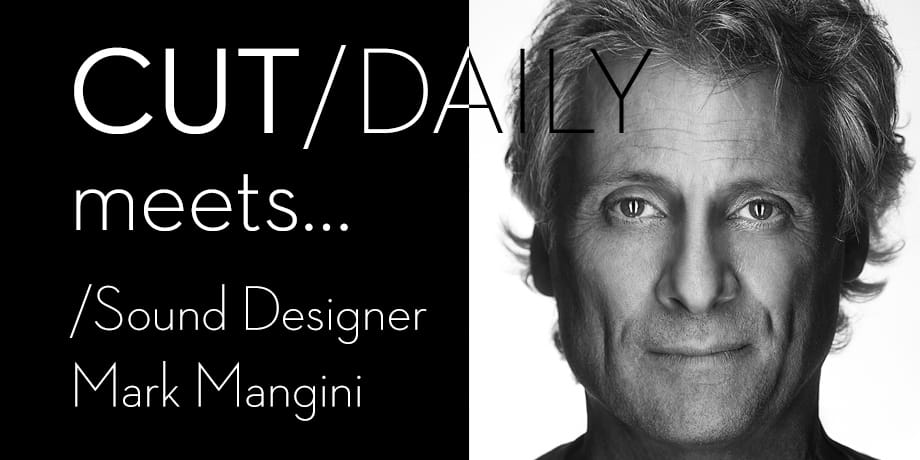
This instalment of Cut/daily Meets..., our on-going interview series with interesting people in Post, draws insight from not one but two talented sound professionals.
Mark Mangini is the two-time Oscar winning (Dune and Mad Max Fury Road) and six-time Oscar nominated Sound Designer who brings decades of experience, and a meticulous creativity to every project.
Martyn Zub is a Re-Recording Mixer, Sound Effects and Dialogue Editor whose recent credits include Send Help, The Weight, Truth & Treason and Rebel Moon.
Both Mark and Martyn work at The Formosa Group in Hollywood.
My favourite thing they shared?
You can’t fake or accelerate experience.
What you can do, to answer your question more directly is to accelerate the learning process by embracing as much work as possible and accelerating the failure to succeed model.
Someone famously said “Fail Early, Fail Often” or maybe I’m saying it.
The sooner one gets failure out of the way, the sooner experience kicks in when you most need it.
— Mark Mangini, Sound Designer
How do you go about creating both layers and balancing the two in any given scene?
Giving the soundtrack dynamics – knowing when to hold back and let the tracks breathe, then know when to be a little bolder, which all assists in the story telling process.
— Martyn Zub, Re-Recording Mixer
please read it now. The future of Cut/daily depends on it!
Mark Mangini – Sound Designer on The Oldest Person in The World
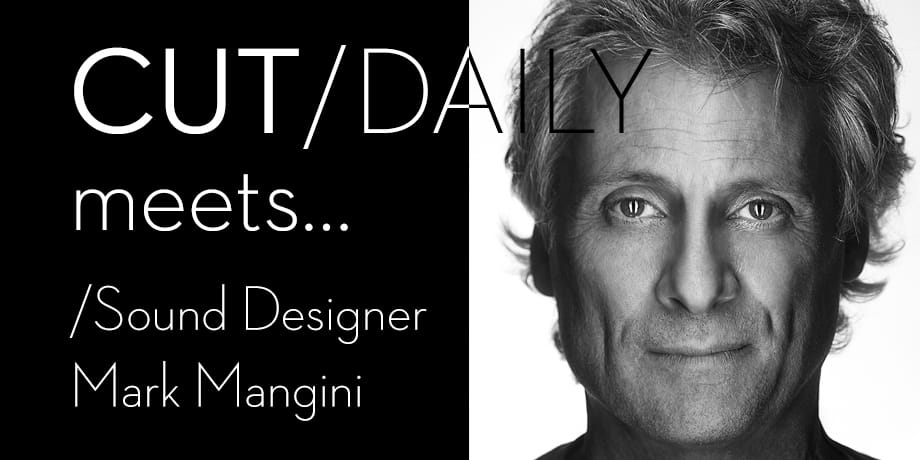
Mark Mangini is the multi-award winning Sound Designer whose latest project, a documentary feature film The Oldest Person in The World, is currently touring the festival circuit including screenings at SXSW and Sundance.
For context, Mark's previous 162+ credits include: Escape from New York, Raiders of the Lost Ark, Gremlins, Innerspace, Cool Runnings, Die Hard with a Vengence, The Fifth Element, The Green Mile, Anchorman, Mad Max: Fury Road, Blade Runner 2049, Dune: Part One.
To be honest Mark's done it all, I made some fun choices there.
- Tickets: Get tickets for upcoming screenings of TOPITW here.
- FYI: Mark has a wonderful series of lectures on sound worth watching.
Given the opportunity to ask Mark about documentary sound I did in these bonus questions...
What are the creative challenges and opportunities that documentary sound design present, that are unique to the form, in comparison to scripted drama? (The assumption would be that it has to 'sound like real life' but I'm guessing this is far from the case!)
I feel a greater compulsion for sonic accuracy and verisimilitude with documentaries. I might, for example, go deeper researching the flora and fauna of a natural location to insure it feels authentic. Same with vehicles, machines etc.
I want the track to be as honest as possible. While I do this on scripted and narrative driven projects as well, it is acceptable for sound to be representational for the sake of the story telling.
In fact, in narrative it is almost always preferable for sound to representational. Not that we can’t do that in documentaries.
There was a moment in The Oldest Person in the World where, in an interview, one of our “oldest persons” closes her eyes and drifts off in thought. Sam and I played a great deal with that POV, leaching the environment around her to create a silent space, as if in her head.
It worked wonderfully, but it was eventually cut from the film.
With regards to sounding like real life, I’m perplexed that most documentaries capture their audio with a single microphone, either a shotgun on a boom pole or on the camera, or a lavalier mic for the person being interviewed.
This, to me, is madness.
As a cinematic form, I think docs need, more so than narrative, realistic immersion. Yet they rarely record audio with immersive microphones to “put the audience there in the scene”.
We hear in 360 degrees. Why don’t docs record like that?
What was the most challenging aspect of the sound on this film and how did you overcome it?
The most challenging aspect of sound on the film was doing the kind of work I like to do in the time and with the money a normal doc offers.
This simply means working harder than normal and putting in hours I won’t ever be compensated for.
Normally, this is a bad prescription but I love Sam and Josh and they treat me like a collaborator in every respect and….my name is on the movie. How can I do less than my best?
I’m not advocating that everyone should give their time away but for some filmmakers and some projects, it’s just good for ones soul.
What did you personally take away from working on this film?
That there are no secrets to longevity, something I already knew.
Sam figured this out pretty quickly, making sure this wasn’t a movie with prescriptives or big revelations. I think the banality of old age, hyper old age is interesting as well as the idea that someone might have an interest in being the “record holder.”
That’s a specious honour.
What’s your daily work routine?
Wake up at 7am, drink coffee, read the newspaper, catch up on the news feeds, kiss the wife, go into my studio and …work.
Stop for lunch around 1pm, eat great food, sometimes even wine, take a nap, go back into my studio and…work.
Make sure I meet my goals for the day. Quit around 7pm or 8pm.
If I’ve done really good work or conquered a vexing creative challenge, I often treat myself, like a dessert, to quitting early. That’s every day…until it isn’t.
If I’m on a creative roll, I’ll work 18 hours straight without a break because I don’t believe in interrupting the creative process when it’s working.
I know this because in the past, when I’ve not completed following through on an idea and I come back the next day, I’ve almost always lost the idea, or the motivation, or the desire or the spark.
Never give up when you’re fired up and in the flow of things.
And if I do work 18 hours, I’ll take the next day off. At the end of the week, as long as I’ve given a good 45 hours to my filmmakers, whenever they occurred, then we’ve all succeeded. This is usually not a 9-5 job FWIW.