
#184 - The one about Test Screenings
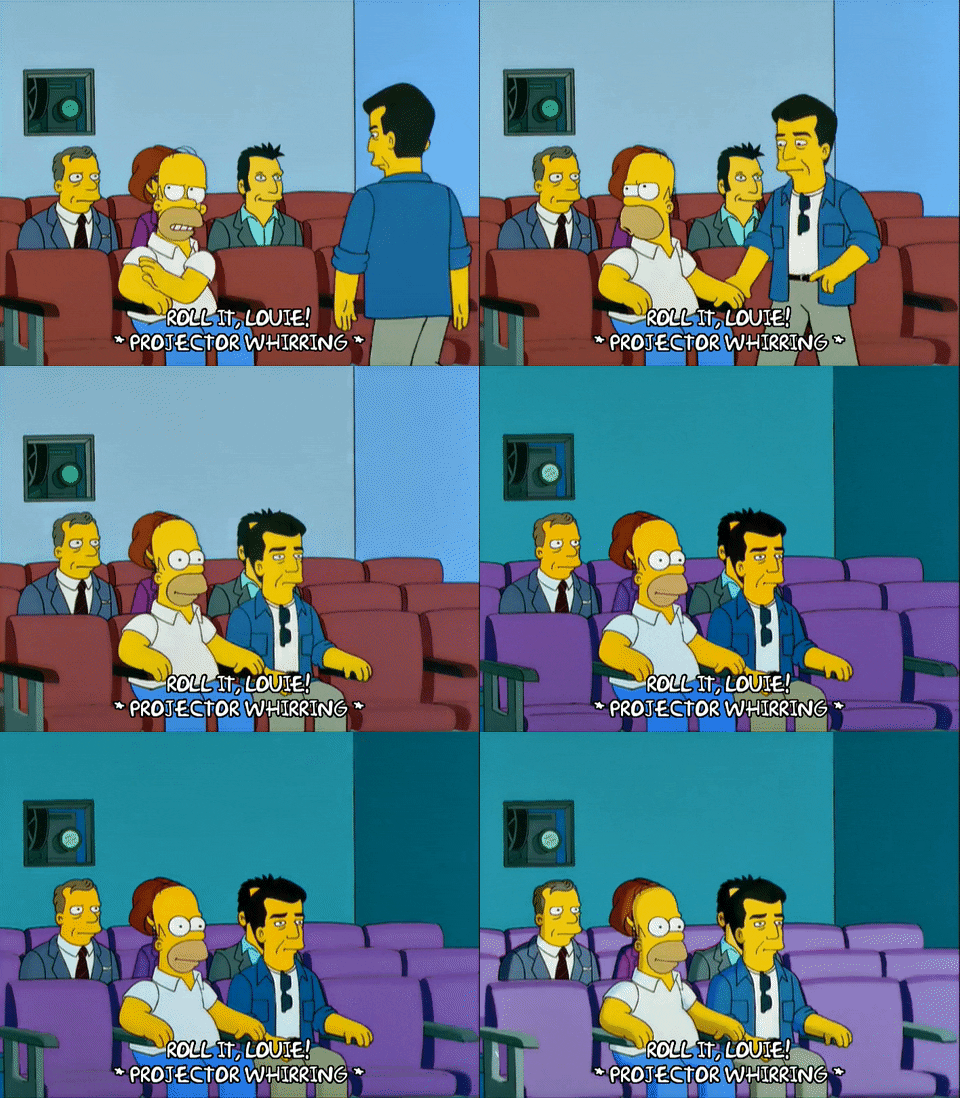
a few thoughts on test screen-ings.
When you've seen something a thousand times, how do you know if a joke is still funny or a scare still scary?
I once* interviewed editor Julia Bloch, who has edited a diverse range of feature films from The Wall to Woodshock and Worth, but a fair few notable scary ones too, including Blue Ruin, Green Room, Hold The Dark and BAFTA winning His House.
When I asked her about test screenings, this is what she said:
How do you read an audience during a test screening, how do you get valuable feedback from a test screening that something is scary?
I remember watching the Judd Apatow Masterclass and he said he records the audience’s laughter during a screening and syncs it up on the edit to see where he got the biggest laughs, or where a joke needs more work.
He said “If they ain’t laughing, it ain’t working.”
“What I think is tricky with that is, that with this kind of ‘scary stuff’ it is very finely tuned. It’s very dependent on a lot of different things working in concert; that you’ve got the timing just right, and you’ve got the sound perfect and you’ve got the music just right.
And a lot of that stuff, for me anyway, comes later in the editing process. It’s not broad strokes stuff, it’s really more fine-tuning. Where you’re trimming frames and doing very careful sound work and other things that you’re not really doing until you’ve gotten pretty far along.
So that’s one of the reasons why you might want to screen later in the process, because it is more execution dependent.
I mean, a joke is a joke and it’s either funny or it’s not. You can make it more funny by fine-tuning the timing of it and all that stuff. But with someone creeping around a corner it could be completely meaningless or it could be terrifying, depending on the execution of it.”