
#481 – Cut/daily Meets... Editor Amir Etminan
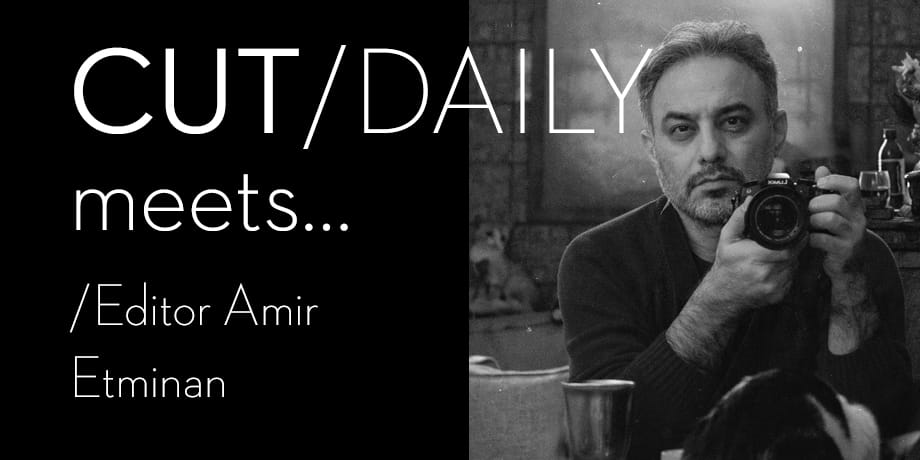
This is not your usual Issue of Cut/daily Meets... but the story behind the editing of It Was Just an Accident isn't a normal editing story.
The film's director, Jafar Panahi, is currently banned from officially making films in his native Iran and has previously served two jail sentences for his work as well as facing travel and press interaction restrictions.
Here is Editor Amir Etminan describing how he worked carefully in secret to bring the film to the world, where it went on to win the Palme d'Or at Cannes this year.
My biggest takeaway?
Making films really matters!
Discover more editorial wisdom here.
How did you come to work on the project?
I was informed about the start of the new project through one of Mr. Panahi’s close associates. They asked me to join the team on a specified date and emphasized that I should carefully consider the potential risks before accepting.
Since this environment was not unfamiliar to me—and I had previously worked under similar conditions—I accepted the project with enthusiasm. However, they reiterated that my situation had changed compared to the time of No Bears.
During the intervening years, due to security concerns and the fear that my editing system might be confiscated, I had relocated to Turkey, settling in Istanbul and transferring my entire editing setup there.
This meant that if I were arrested during the production, I could potentially be banned from leaving the country, which would have been extremely difficult given that I no longer lived in Iran.
Two days before filming began, I traveled to Iran, first to Salmas—my hometown—and then drove my own car to Tehran and the filming location, an eight-hour journey.
I went straight to the set and joined the team. Thanks to our previous collaborations, we were already very familiar with each other’s tastes and working methods.
Paint a picture of your daily editing experience
Working in Panahi’s cinema has its own very specific conditions. Due to the sensitivity of the circumstances, we must operate with the smallest possible crew.
At the same time, we have a very clear working philosophy: editing should begin simultaneously with the shoot.
For accommodation, I stayed in a vacant house belonging to one of Mr. Panahi’s friends. I dedicated one room for rest and another for editing, while the remaining rooms were used to house the actor playing Vahid and for makeup and wardrobe.
Every morning, the makeup artist and other actors would come to the house with strict attention to security protocols. Once everyone was ready, we would drive to the day’s shooting location in my car—an address usually sent the night before.
In practice, my car functioned as our DIT station, wardrobe transport, makeup room, and storage for small props—all at once.
Throughout the shoot, I stayed beside Mr. Panahi. When he approved a take, he would also seek confirmation from me as the editor, from Amin Jafari (the cinematographer), and from Reza Heidari (the sound recordist). If none of us had any objections, the shot was locked.
Once a memory card was full, I would take it to the car and use a small MacBook Air to transfer the footage to SSD drives and immediately start generating proxy files. While the proxies were being created, I would return to set, and this cycle would continue all day until the shoot ended.
After filming wrapped each day, I collected all the camera and sound cards and returned to the house with the actors—and gave anyone who was on my route a ride home.
Once back, the first thing I did was transfer the contents of the cards and SSDs to the main drives, then create backups. At the same time, I would start generating proxies from the newly copied footage.
During this process I would eat, shower, and rest briefly, always checking the status of the file transfers and proxy creation. Once the cards were empty, I placed them in their designated case so I could return them to the camera team the next morning.
When the proxies were ready, and while the daily backup process continued, I would begin editing. I first synced all the picture and sound, then reviewed every take, selected the best ones, and began assembling the scene.
When the day’s editing was done, I informed Mr. Panahi, and he would come to the house where I was staying. We would review the edited scenes together, refine them in greater detail, and sometimes decide that a scene needed to be reshot.
Some days we paused filming to allow the team to rest. On other days, shooting ended early or started late. On those days, Mr. Panahi and I had more time to work together and advance the parallel editing process.