
#481 – Cut/daily Meets... Editor Julie Cohen
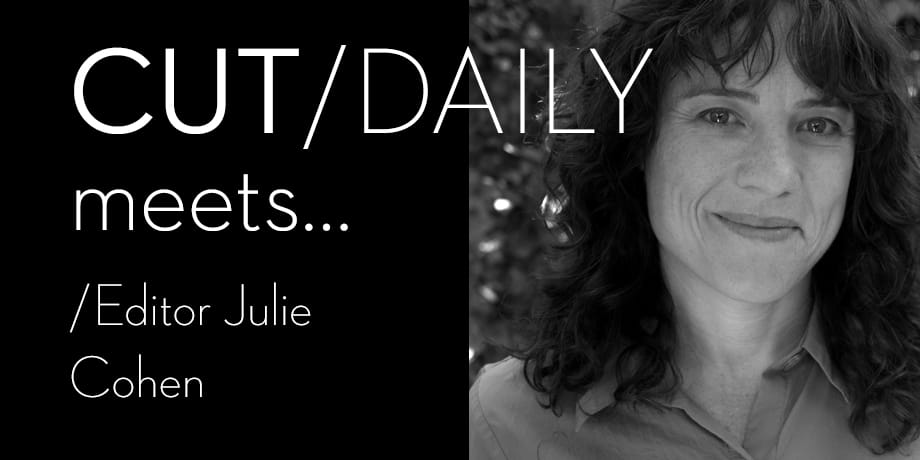
Every editor's career looks different from every other editor's career.
That's a beautiful and encouraging thing.
It means there is no one way to break into the industry, work in the industry, or move up and on within the industry. Or what ‘the industry’ even is for each editor.
Editor Julie Cohen worked in reality TV for nearly a decade at a senior level before ‘stepping down to go across’ into assistant editing in scripted drama.
Today, she has episodic TV credits with all the major streamers, including Netflix, Amazon, HBO, Hulu, FX and Peacock, having worked on successful series such as:
- The Paper
- Tell Me Lies
- Space Force
- Sorry for Your Loss
- On Becoming a God in Central Florida
- Transparent
- Born This Way
So she's a working editor worth listening to.
You can keep up with Julia's latest editorial work here.
Julie also directs, and her recent dramedy short film The First Day of Your Last Period just made its streaming debut on Omeleto.
Discover more editorial wisdom here.
What’s your daily work routine?
In the mornings, I often rewatch what I cut the day before.
Taking a break and coming back with fresh eyes makes a huge difference, so it's helpful to review my work after a good night's sleep.
Sometimes I'll make adjustments right then, but often I'll just take notes of things to tweak later when I'm assembling the cut.
If I’m working with dailies, I like to prepare by reviewing the script supervisor’s notes before diving into what was shot the day before. I'm a bit old school, so I actually print them out and keep them in my editor's book.
As the editor, I see myself as the librarian of the footage—it's important for me to know exactly what was shot, what still needs to be shot, and to stay in tune with the director’s vision for each scene.
After that, I dive into watching the dailies and take notes on what grabs me emotionally—whether it makes me laugh, cry, or just resonates somehow.
Then, I start assembling the scenes, cutting quickly and trusting my first instincts. If a scene could go in more than one direction, I'll create alts.
I like to stay on top of the footage every day, a.k.a. “keep up to camera” so that if anything’s missing or if there are issues, I can alert production right away.
That’s a typical day working with dailies.
But when I’m in the Director’s Cut or Producer’s Cut phase, I’ll be collaborating with others either in the room or over Evercast, or a similar platform.