
#488 – Cut/daily Meets... Oscar nominated Editors
In case you didn't know, this year's Oscar nominated Editors are:
- F1 — Stephen Mirrione
- Marty Supreme — Josh Safdie & Ronald Bronstein
- One Battle After Another — Andy Jurgensen
- Sentimental Value — Olivier Bugge Coutté
- Sinners — Michael P. Shawver
That's why this bonus issue of Cut/daily Meets... is landing right before the voting window closes next week (that's you, Academy members!)
Plus you can also hear direct from the editors of projects nominated for:
- Best Picture, Train Dreams, Editor Parker Laramie
- Best Documentary Feature, The Perfect Neighbor, Editor Viridiana Lieberman
There's a lot to enjoy but you'll be rewarded if you stick with it so be sure to click through to read the full interviews.
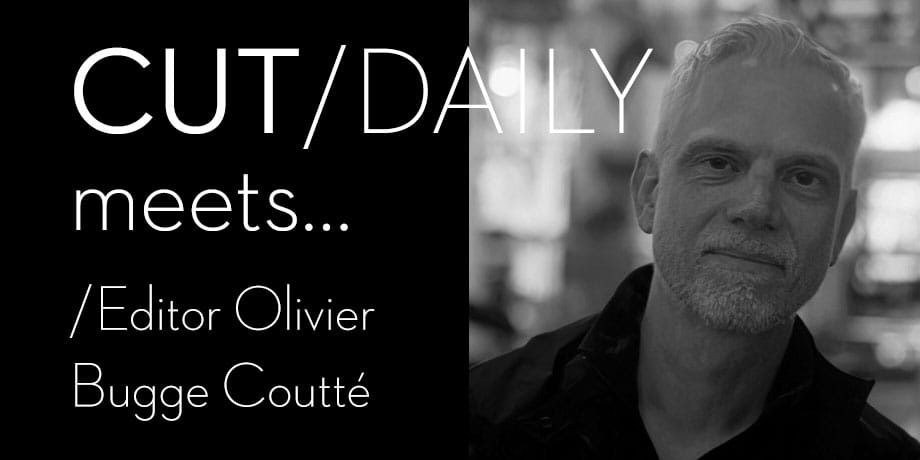
Sentimental Value Editor Olivier Bugge Coutté
I loved Sentimental Value and I loved the way it was edited.
The film has such compelling performances, crafted with real nuance, discipline and soul.
Olivier Bugge Coutté edited this film brilliantly alongside long-time collaborator and friend, Director Joachim Trier. If you've not seen it yet, make time for it. It will stay with you.
Art of the Cut also has a wonderful conversation filled with insights on Olivier's approach to editing that's also well worth a read.
Read the full Cut/daily Meets... interview with Olivier here, which includes a fistful of bonus questions.
One of the most striking - yet really refreshing - aspects of the editing is the hard cuts to black when a scene is done.
You've said that "I try to enter the scene at a moment where you ask yourself a lot of questions, so that you are deep inside the scene already. Then try to get out at a peak moment. So you're left with the emotions when you leave the scene, or questions if it's something that has to do about driving the story forward."
How do you find those places?
Some of the cuts to black were already written in the script, and while they may not have ended exactly where they were originally meant to, the idea of cutting to black was already proposed by the script.
Joachim's scripts rarely have a structure where scenes follow scenes in a classical way. So in order to tell the audience that you shouldn't expect all the scenes to be just set up and pay off, cutting to black is a great way to reset time and space. You can go and cut to black, you can cut to a historical moment, you can cut to a dream, and you've got your montage.
And people will accept that it doesn't necessarily link directly to the scene that came before, but in the overall structure, it will drive the film forward. It allows you to go in a completely new direction.
I like when art asks a lot of questions. I like it when the audience, as a viewer of a painting would, has to work on what’s going on in front of them, when they don’t have all the answers immediately. They should be able to look at it, leave the room, come back, look at it again, and be able look at it over and over again.
It’s the same with when you cut the scene. You shouldn't be told everything all the time. I love the situation when you are lost in a scene and you have to work to discover what exactly is the interpretation of this moment.
And that can be physically when you open up the scene. I don't know where I am. I'm opening up straight on a face of Nora. I can see that she's in panic, but I don't know if she's acting inside of a theater play, inside of a film, or if it's her real emotions.
I also like when a scene doesn't give you the answers. It raises a lot of questions in a psychological way. It can describe the relationship between the two persons, but it doesn't resolve completely at the end. It just leaves.
That allows scenes to compel questions about the audience’s interpretation, and how it resonates in them psychologically. It also gives a momentum, in the sense that the more questions a scene can ask, the longer the film as a whole will keep the audience engaged. You can wait to give them the final answer until just before the end credits.
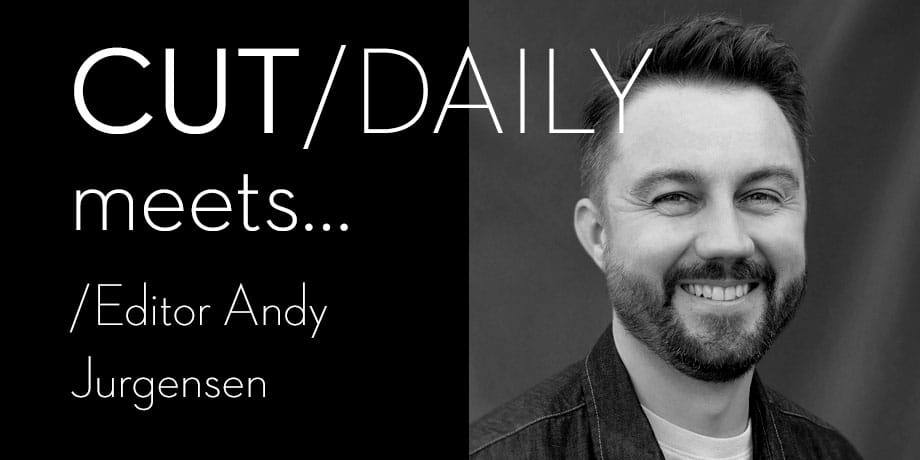
One Battle After Another Editor Andy Jurgensen
I loved watching this film, the way God intended, projected in glorious VistaVision at the Leicester Square Odeon Luxe, in London.
OBAA's editor Andy Jurgensen graciously shared insider insights on his editing process in his Cut/daily Meets... interview.
Andy has been part of the PTA-team for well over 10 years; previously editing Licorice Pizza, and assisting on Inherent Vice and Phantom Thread – plus editing a ton of PTA's music videos along the way.
What struck me most about the relentlessly wild ride that is One Battle After Another, is that through it all, the heart of the film is a father's love.
That got me. And the killer ‘roll credits’ music.
Read Andy's full Cut/daily Meets... interview here.
One of the frequent comments in reviews is that while the film is long (nearly 3 hours), yet it really keeps up a blistering pace. How did you achieve that in the edit suite?
We were always looking for ways to make the beginnings and endings of scenes more dynamic.
That might mean chopping off the end of a scene abruptly or pre-lapping a sound or a line of dialogue to push us forward. We experimented a lot with where to let the music drive things and where to pull it back entirely.
At the same time, we were conscious of giving the audience places to breathe before the momentum ramps up again.
The Christmas Adventure scenes and Bob & Willa’s argument at the kitchen table work as those little breaks in the rhythm, for example. There’s no music, very minimal camera movement, and the whole pace relaxes just enough to let things settle before the film drives forward again.
What’s the #1 thing that has helped you shorten your craft’s learning curve?
I know this is a luxury not many editors get, but as I stated above, Paul likes to screen dailies in a communal setting at the end of each shooting day during production.
We set up a screening room and project a selection of takes synced with the on-set audio. It’s a wonderful way to review the work, judge performances, and make adjustments for scenes still to be shot. Sometimes it even leads to reshoots.
Being in the room with Paul as we watch gives me a huge head start. I can note which takes he responds to, start shaping how the scene might come together, and communicate any issues to other departments right away.
Watching dailies together used to be a standard part of the process, but with PIX and faster shooting schedules, it’s unfortunately become rare.
For me, it’s been invaluable in speeding up my understanding of the material and sharpening my instincts.
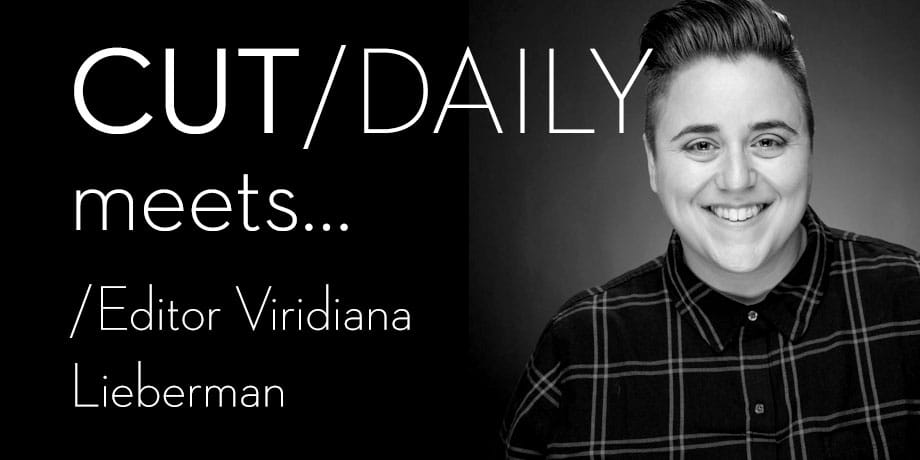
The Perfect Neighbor Editor Viridiana Lieberman
How do you craft a film like The Perfect Neighbour from 30 hours of a random jumble of sources cameras including police body cams, Ring doorbells, 911 call recordings and more?
With patience and attention to detail.
Editor Viridiana Lieberman and Director Geeta Gandbhir's latest documentary collaboration is nominated for Best Documentary Feature at this year's Academy Awards and for good reason.
But what I loved most about everything Viridiana had to share was the poetic passion with which she shared it all.
Read on for an editorial pep-talk from a fellow editor who truly loves her craft.
Pushing form and approach into singular works is what I continue to endeavour to do with every project, while seeking out the humanity that connects us and can call to action to evoke change.
— Editor Viridiana Lieberman
Read Viridiana's full Cut/daily Meets... interview here.
You’ve described the raw materials on The Perfect Neighbor as a “thrilling challenge” of some 30 hours of body cams, dash cams, Ring cameras, 911 calls and canvassing interviews, all arriving in a chaotic, disordered state.
Practically, what did your first few weeks in the timeline look like—how did you set up the project so it was even possible to think creatively inside that chaos?
I just dove in. Thirty hours isn’t actually that much for a feature, but it came in every format imaginable: body cams, Ring cams, 911 calls, canvassing interviews interrogations...etc.
Premiere’s the best for that mess: drag everything in, no fuss, start watching.
Director Geeta Gandbhir, jokes that she was my first AE because she had originally strung it all out to discover the chronology because the files had varying information when it came to dates.
That enabled me to simply break it down by call and create a beefy kitchen-sink cut of sorts that I started to hone.
I didn’t multicam anything, I felt a compulsion to see everything on the timeline to make sure I was staying true to the evidence and that everything the audience sees and hears is what is actually happening in that moment.
Sometimes that meant layers upon layers of officers on the scene that would turn their cameras on and off at different times but all synced to the chronology.
The challenge was making sure each call was doing new work, building on one another, raising the tension while honoring the raw observation of this evidence that we felt an immense responsibility to discover the truth in.
Train Dreams Editor Parker Laramie
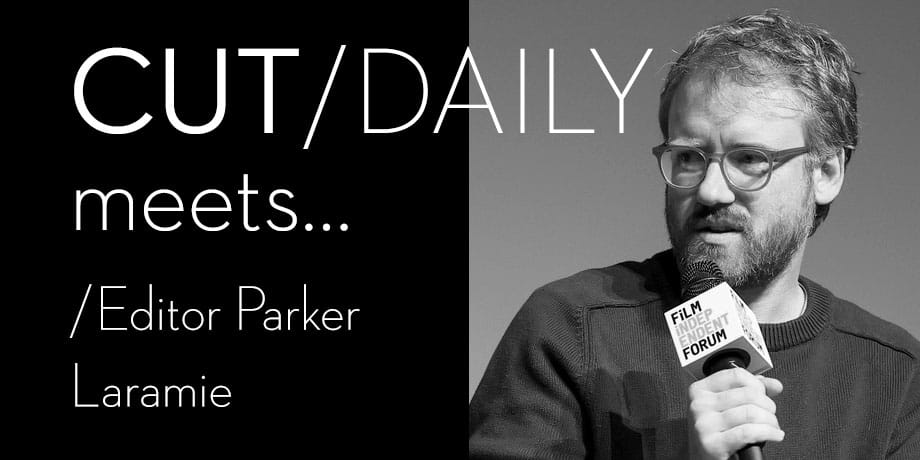
Editor Parker Laramie's latest project, Train Dreams is nominated for four Academy Awards including Best Picture.
Parker's previous credits include the excellent and three time Oscar nominated feature Sing Sing, the indie award winning documentary André is an Idiot and a host of the TV episodes, features, documentaries and shorts.
Parker has cut a little of everything and it seems like that strong mix of experiences helped him carve creative edits out of non-linear material.
What I appreciated most about everything Parker had to share was his honesty about his previous career errors, the creative challenges on Train Dreams and how he and Director Clint Bentley solved them in the edit.
Read his full Cut/daily Meets... here.
In your Filmmaker interview you mentioned that so much of Train Dreams was about taking Denis Johnson’s “sweeping, unruly” novella and boiling it down to a tight emotional story, then pushing that focus even further in the cut.
How did you practically keep that emotional throughline on track inside the timeline when individual scenes or sequences were constantly being rearranged?
For the most part, scenes and sequences were actually being rearranged for the sake of keeping that emotional throughline on track.
The biggest challenge was telling a story over an entire lifetime of a man who is very reserved, says very little. The first five minutes was rewritten in the edit to give us a sense of who this man was before witnessing the tragic event at the top of the film that changes the course of his entire life.
But we found that front loading a lot of information like that also overwhelmed audiences a bit - so in the last few days of the edit we added a scene we had cut from later in the film - the “Passageways” sequence at the very top of the film.
It gave us a chance to have something a bit more poetic and soft, to invite audiences to lean in a bit before getting taken on a ride through the first few decades of Robert’s life.
Narration in Train Dreams has been described by you as a “double‑edged sword,” something that could either unlock the film or flatten it.
For editors dealing with voiceover that risks over‑explaining, what were the specific rules or tests you and Clint used to decide when the narrator should step in and when you had to force yourselves to trust picture and performance?
The thing I always try to do is to make sure the voice over isn’t telling us anything we can glean from what we’re seeing or hearing.
So if we can do it with score, sound design, or absolutely anything else, we would take it out.
In some cases we would exhaust every idea we could think of before we would even put narration in to begin with, in others there would be a line from the book that would resonate and suddenly breathe new life into an image or a scene so we would add it in.
F1 Editor Stephen Mirrione
Editor Stephen Mirrione is one of my favourite editors ever since I saw his Oscar winning work on Traffic back in 2001.
Steve Hullfish interviews Stephen at length on his monumental feat of turning an enormous amount of dailies and details into a singular thrill-ride for F1.
The attention to detail boggles the mind.
Art of the Cut has our "F1" interview this week with Oscar-winning editor Stephen Mirrione, ACE. He says that the shooting ratio for the film was nearly 2000:1. That means watching dailies for 3 straight 10-hour days just to cut 1 minute of the film. Exhausting!@boris@Facilis pic.twitter.com/0DDUUaK4pN
— Steve Hullfish, ACE (@SteveHullfish) June 29, 2025
SM: Having worked with [director Joe Kosinski] a few times now, the way he gets all these great details and just the nature of how we were shooting this with just miles and miles of footage to choose from, I already knew that the only way to feasibly get through it in time and efficiently is to work in layers.
The first layer is just making sure I have the material to tell the story that’s in the script, so that might mean picking a nice long take of a performance of the actor’s face going through a specific point. It might mean some of the pit crew dialogue and just sketching that out. Imagine a sculptor taking a big block of clay, then slowly it starts to form that shape.
The difference is that the sculptor probably wouldn’t bring people in to take a look at that blob as it starts to take shape. We really had to - as we were going – to get feedback on things and check things and make sure that things were making sense. One of our producers, Chad Oman, would come in and start to give notes, stop himself and say, “Okay. I know. Layers.”
They got tired of me saying, “Guys. Be patient. Eventually, all these things you’re saying- when we get to that stage in the process - you’ll be shocked that they’re just going to suddenly appear.” So a lot of the process for that was first figuring out what I had.
The other brilliant thing that Joe came up with in making this was that - through the partnership with F1 - we got access to all of the broadcast track cameras for all the days of practice, qualifying and race day.
I think in total that was something like 2500 hours of B-roll that we could then reskin and change any car to another car or turn a car into our car and our driver if we needed to. These are for the wider exterior, ground-to-car shots.
Any shot that’s attached to the car or pointed at our driver or from another car on the track at the same time, those are all our cameras. Those were all shot by us. But anything that you see that is of a car going around the corner from somewhere outside of the track, those are shots from the broadcast.
I don’t mean that they were in the broadcast. I mean we got the entire race from each particular camera set up.
Marty Supreme Editors Josh Safdie and Ronald Bronstein
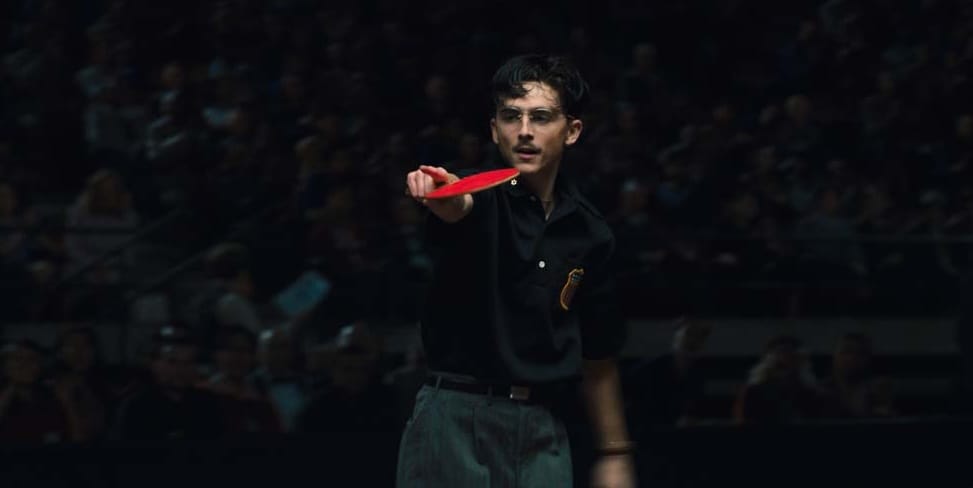
I really wanted to interview director Josh Safdie and co-writer, producer and editor Ronald Bronstein but alas I could not crack the A24 press-fortress. Maybe another time.
That said, the latest Art of The Cut interview from the indomitable Steve Hullfish, is one of the few editing focused conversations I've found with this creative powerhouse.
Marty Supreme is also nominated for Best Picture, Best Editing, Best Directing and Best Screenplay, so presumably, they've been busy talking up the town in that regard.
On their compulsion to edit in sequence once production has wrapped:
JS: I think it’s essential that you know how a story begins. In the same way, if you’re at a fireside or you’re at a bar and you’re telling someone a story, you need to feel the spectator in the room. In our instance, the spectator is ourselves.
You need to feel the emotional flow because there’s a real musicality to the way that we edit.
There’s a certain configuration that only works if you’re building on top of it. It’s like building a building. You don’t build the 38th floor. You start at the foundation and you build your way up.
So it’s essential that we do that. In that regard, the idea of an assembly is so frightening to me and so foreign that we would never in a million years do that.
The first cut that we have is the fine cut. And when I say “fine cut,” we cannot move on from an edit unless it has sound design attached to it. So we’re doing intense in-house sound designs with a Foley pit and an incredible library.
Sometimes I’ll look at Ronnie and say, “You spent three hours doing the sound on that one little piece of Marty putting something down on the table in the middle of a dialogue scene!
We’re never going to finish the movie!” He’ll look at me and I realize he has to do that. It’s a part of the process, that’s because we have no suspension of disbelief.
We need it to be, quote unquote, as perfect as we can do in the moment. Now, of course, you go back and you do another second fine cut, but we don’t believe in assemblies and we never screen them.
RB: That loops back to just us being anxious by nature, in the sense that the idea of working on something in the moment and knowing that there’s a missing piece inside of it, but you’re just going to section it off to a little vacant piece of real estate in your skull and just know “I’m going to set this aside because it’ll be filled later.”
That’s anathema to the way we think. That makes us so anxious. We think of editing as another phase of writing. It’s indistinguishable in a way.
So you wouldn’t start telling a story from the middle, and you wouldn’t start editing a movie from the middle. The decisions that we’re making in a given scene are going to inform the decisions we make in later scenes.
If we take a line of dialogue that - when we wrote it - we thought was essential to the forward progression and completion of a certain plot line. If we decide that that line of dialogue was less interesting than the behaviour around it - that was discovered on set - we remove it.
We’ll also remove something related to it later in the film. So, it would make no sense for us to edit out of sequence.
Sinners Editor Michael P. Shawver
As I'm sure you're aware Sinners has been nominated for a record-breaking 16 Oscars, including Best Editing by Michael P. Shawver.
I'm not sure what else I could add to '16 Oscar nominations(!)' by way of introduction so I'll let you dive into Michael's Art of The Cut interview for the details.
MPS: The scariest time for an editor is the first time you present a scene, then press play, and you’re thinking, “I’m gonna get fired.”
I’ve had some pretty monumental benchmarks in terms of my process that have helped alleviate that.
Even as simple as having a good work-life balance, getting sleep, exercising will take care of 75% of any of the stress anxiety. Just get it cut. Just throw it out there. Just do it. Take the risk, take the swings.
If you’re an editor, you should believe that you have good taste. If you’re sitting there afraid, thinking, “I don’t wanna mess this up” or “I don’t want to do this” then you’re never gonna find the stuff that’s different.
I would rather throw random takes down in order of lines and sit back and watch it and think, “That one take works, but the rest of it’s terrible. Let me work from that.” Then that already gets me in the reediting process, which is the more fun part and the more exploration part.
So, remember you're the editor and cut daily.
PS - Phew! Well done if you made it this far.