
#498 – Life Inside an Indie Post House
Sit back and relax, this is going to be worth it.
If you've ever wondered what happens inside someone else's edit suite or entire post-house, then this issue is for you.
Editor Ty Clark was kind enough to paint a picture of life behind the scenes at successful indie post-house, Pursuit Films, as well as sharing his own insights on the art, craft and technical workflows of post-production today.
Located in Tulsa, Oklahoma, Pursuit has deliberately cut it's own path through the industry for the past decade, despite doing “no commercial work”.
A strategy that's sustained them through the years and is based on
- having a strong point of view
- holding fast to a sense of purpose
- and listening to how the work makes you feel.
I for one, learned a lot!
Outside of actually editing, what do your responsibilities involved at Pursuit Films and what areas have you grown in the most?
We are a smaller sized production company in a smaller sized “market” (U.S.) if you will, so each of us often have to wear multiple hats.
Aside from telling and shaping stories with editing and color grading I also design, operate, manage, etc… our entire post pipeline - camera card to delivery - with help from the team, of course.
I’ve been known to wrangle data (often mislabeled as “D.I.T.” - a union title) on sets, as needed. I’ve directed a few things. And if you were to look really hard you might find me as an extra in a reenactment or something.
Again, we often wear many hats. I’m not an actor. But I also am always looking to find ways to improve our processes.
I never really considered myself a “tech person” - I’m more of a dark and mysterious artist (insert sarcastic laughing to self meme) - but I’ve enjoyed learning about things like NAS systems and solving the problems that may arise in the ever changing landscape of post-production.
So, aside from constantly striving to improve in the craft of editing and making films by experience, I think I’ve grown a lot in the technical side of things.
Like, another example is I didn’t really set out to be a “colorist” but I was interested in and inspired by it, so I asked myself how I can make our projects look like the things that inspire me.
That led to learning about what RAW and LOG actually is, color management, color spaces, etc… and on and on. Now I’m learning and hoping to implement Dolby Vision before too long.
But yeah we managed to build out a pretty decent infrastructure and workflow for our size that is all about efficiency and maintaining quality.
What's the technical set up at Pursuit Films?
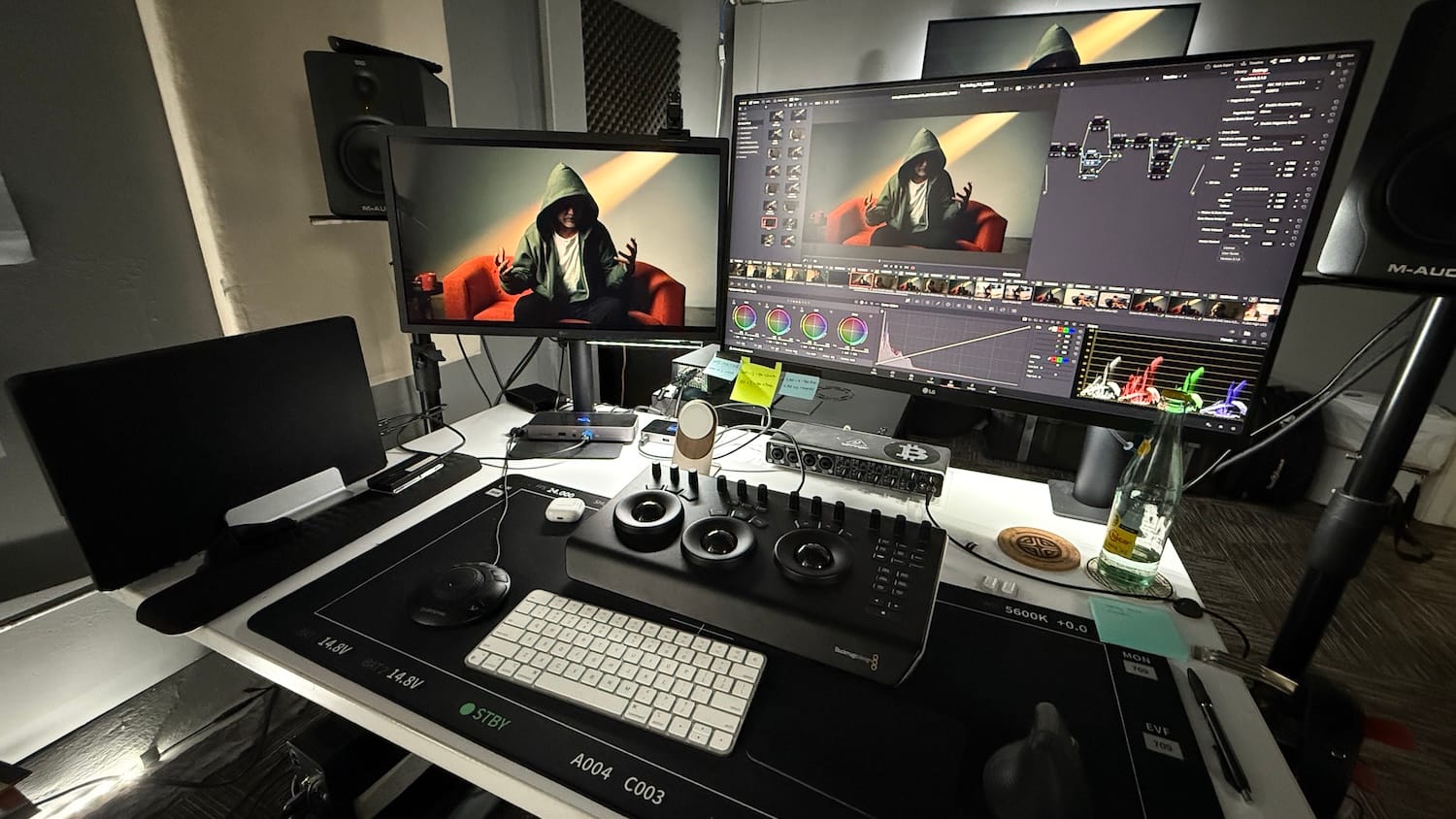
We’re primarily an Apple/Mac Silicon based studio with the caveat of 2 PCs for the MoCAP work we’ve been doing.
Everyone has a 10G ethernet drop and while there’s Mac Minis and Mac Studios we mainly use those as dedicated remote edit bays, we mostly all use MacBook Pros that we dock in with OWC Thunderbolt docks connected to Sonnet Thunderbolt to 10GbE adapters.
This was so we could move around the studio for various reasons as well as working from home with the same computer.
Honestly, I initially questioned Jeremy about MBPs and docks when we were upgrading and changing some things in 2021 but it proved to be a great setup for everyone and works great.
We’ve learned the power of these Silicon Macs for sure.
An M1 MAX MBP with 64GB of RAM still blasts through about any high res footage project with ease - given you’re configured correctly and practice decent MBP maintenance - even then you can do a lot.
Storage wise we’re mainly in the Synology ecosystem.
Premiere Productions
Anyway, the absolute biggest positive fix and “upgrade" in our team environment though was the implementation of Premiere Productions. Without a doubt.
I often wonder how anyone ever managed without it. I’ve cut 2 short films - with only 3-4 days of production media - in the last year with Productions just because it’s more efficient.
Also, I love that you can build out like a huge SFX project to your liking just one time then when needed “Add Project to Production” and boom… pre made SFX project organized and ready.
For learning about Productions I recommend - aside from just doing it wrong a few times - Karle Soule’s playlist and Adobe’s talk with Team Fincher for learning Productions.