
#499 – Inside Editor Joe Walker's Dune II Timeline
Imagine if you got to sit in one of your favourite editor's suites for the day, peering over their shoulder and hear them hold forth on the finer details of their craft.
Well today is that day.
Editor Joe Walker and editor Steve Hullfish have shared a fantastic hour long conversation, walking through Joe's timeline for Dune Part Two in fine-grain detail.
Spoilers ahead!
This little bit of the sequence is a section where I'm super happy with the way it turned out. And this the great thing about being able to collaborate, to be the meeting point.
The editing room is the still point of the turning world of sound, camera, performance, and VFX, and music. And this is a way of combining them all in a beautiful dance.
— Joe Walker, Editor
Dune Part III is scheduled for release on December 18th 2026.
Take This Further
The Cut/daily archive has a treasure trove of Joe Walker related insights including:
- #005 - Editor Joe Walker's Hat Trick
- #254 - What Joe Walker's Oscar Win Can Teach You
- #474 – A Life in Frames, Joe Walker
- #420 - Cut/daily Meets... Editor Joe Walker
please read it now. The future of Cut/daily depends on it!
Inside Joe Walker's Dune II Edit Suite

Editor Steve Hullfish has been running the Art of the Cut interview series for over a decade, and his first conversation with Joe for 12 Years a Slave was the second ever interview in the series.
Since then they've spoken 8 times by my count (links at the end of this issue) and what's so engaging about each conversation is the eloquence with which Joe discusses his craft and depth of detail Steve's own extensive experience as a working editor knows how to draw out.
These conversations should be required reading.
Here's the complete hour-long conversation.
Bonus Chapter list
I made this detailed chapter list to make it easier for you to return to specific parts of their conversation at a later date. You're welcome.
- 0:00 — Intro: Inside Joe Walker's Dune Part Two Timeline
- 1:26 — Interview Start: Building a Home Post Facility
- 1:55 — The Stereo Philosophy: Why Joe Edits in Stereo
- 2:43 — Stream Deck Shortcuts for Audio & Scripts
- 3:13 — Timeline Breakdown: VFX, Dailies & Audio Layers
- 4:18 — Building Musicality: Why Sound Effects Come Before Music
- 6:32 — Fake Documentary Realism: Designing Arrakis
- 8:14 — Paul's Vulnerability & Human Drama in Dune
- 9:06 — The Eclipse Scene: Oners & Shifting Point of View
- 10:13 — Harkonnen Sound Design: The Goldfish Bowl Effect
- 12:35 — Shepard Tones: Endless Rising Tension
- 15:31 — Editing Violence: The “Nonplussed” Beat
- 18:20 — The Jump-Cut Trick: Removing Frames for Wallop
- 20:37 — Roadrunner Rhythms: Chuck Jones & Dune
- 22:57 — Withholding the Ace: Delaying Audience Rewards
- 25:46 — Human Drama vs Colossal Landscapes
- 27:38 — Sound as Rhythm: Editing Through Audio
- 28:29 — Feyd-Rautha: Story Intent & Character Mirroring
- 32:38 — Internal Sound: Entering Mental Spaces
- 35:34 — Syncopation: Matching Dialogue to Music
- 36:51 — Evolving Part Two: Underplaying The Voice & Visions
- 40:31 — Kuleshov Effect: Showing Foresight in 30 Frames
- 41:12 — Condensing 14 Hours Into the Final Duel
- 44:55 — 1 Second, 22 Frames: The Perfect Reaction Shot
- 46:48 — Why the Final Fight Has No Music
- 49:10 — The “American Cut”: Slamming the Lens Axis
- 51:31 — Making the Audience Think Paul Will Die
Sound Design Insights
One of the things Joe referenced in detail was his approach to working with sound.
Here are some of my favourite moments about how he handles dialogue, sound design, music and more.
Stereo works
Despite working on the biggest projects, Joe prefers to monitor in stereo because he finds other formats distracting.
I listen in stereo. That seems to work for me. I did experiment with other formats, but there was always something distracting about them. If it works in stereo, it's going to work.
Sounds like music
I try to avoid using music until absolutely necessary.
I just try and encourage the dialogue to its best quality and to give space for sound effects and even start developing sound effects of our own for the cut, but also with our sound designers - who were working quite early.
Even if it isn't actually used in the final mix of the film, it helps me find the rhythm of a scene and to be able to kind of increase the musicality of a cut.
An awkwardly silent knife fight
I've talked about the value of withholding things. So, I've got to say there was a bit of manipulation there in terms of sound again to kind of create some tension, which is that the knife fight doesn't have music.
You know, maybe it would be a typical thing in a Hollywood film to get the drums in at this point and goose it up that way with a bit of Hollywood drumming, but this is awkwardly silent.
All eyes are on it. And the crowd isn't ‘ooing’ and ‘ahing’ at any moment until Paul is at this clear disadvantage. That's where we saved the voice of the crowd, until that point.
It felt very important to make it brutal, real, visceral, and dynamic to watch.
See below for how little the final fight scene changed from Joe's first cut!
Improve your sound design chops
$49 | $29 — Limited launch price
30-day money-back guarantee.
7 emails. One week. Read in 15 min a day.
Tried and tested by 70+ editors ahead of you.
I'm really delighted that over 70 editors have already taken Cut/daily's first training course, Adding Audio Polish, with astoundingly positive feedback:
Your Adding Audio Polish training series was absolutely terrific!
It spans the knowledge of an entire college-level curriculum in a succinct fashion for working editors.
You really nailed something that needed to be done - creating a concise, repeatable system - for single person producer/editor workflows like mine.
— David. K – Documentary Editor/Producer
This short and succinct series has been my best introduction to audio as an editor who has come from more of an online background, who occasionally needs to fix and sort audio issues.
— James Hawkes, Editor
If knowing how to improve your sound design skills, knowledge and tactics is something you struggle with too, then this comprehensive email-based course will leave you feeling far more confident about adding audio polish to every project you touch.
Don't miss the launch price offer!
Stream Deck Functions
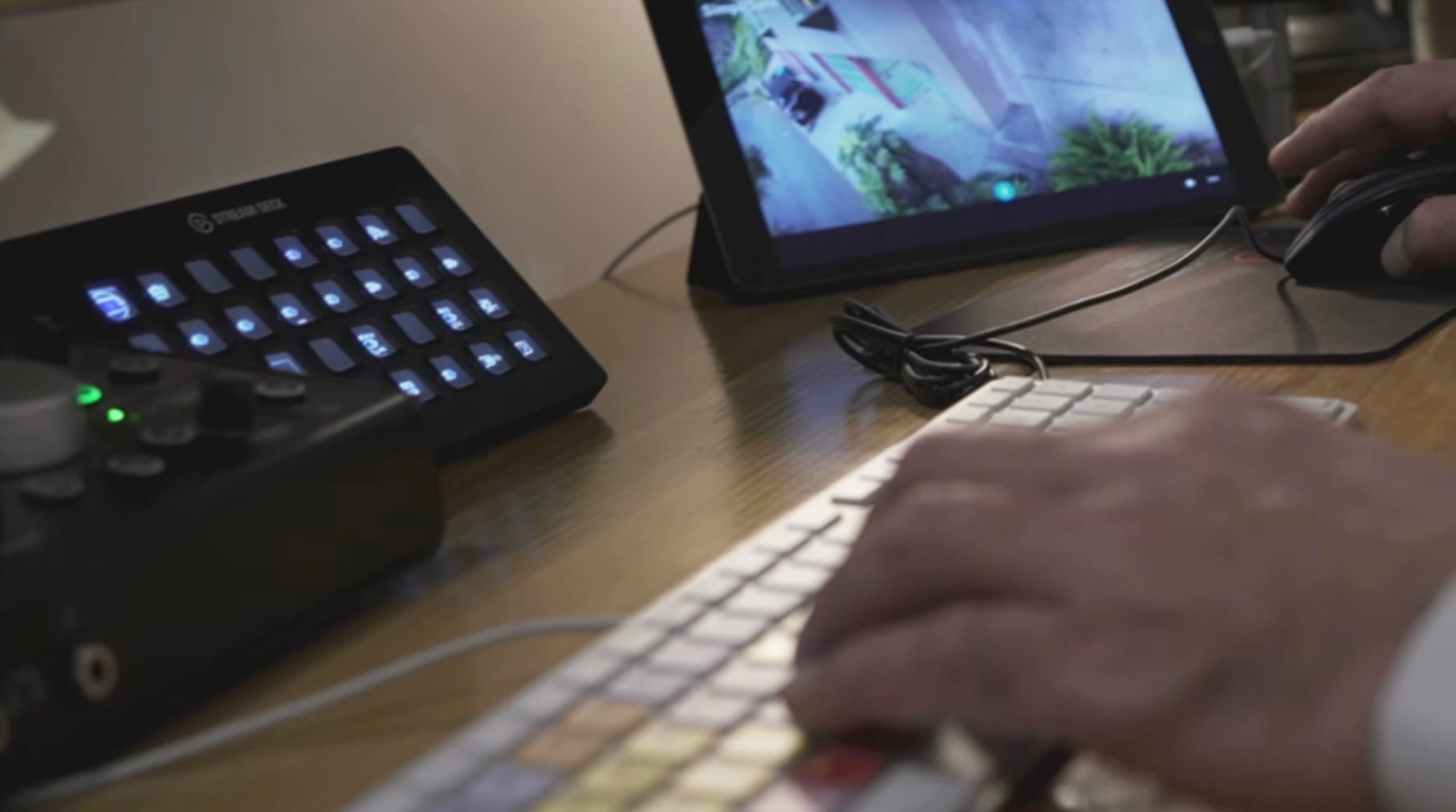
Joe share a trio of interesting use-cases for his Stream Deck XL.
- Open online sound library in browser
- Open the script on the desktop
- Toggle blocks of audio channels in Avid
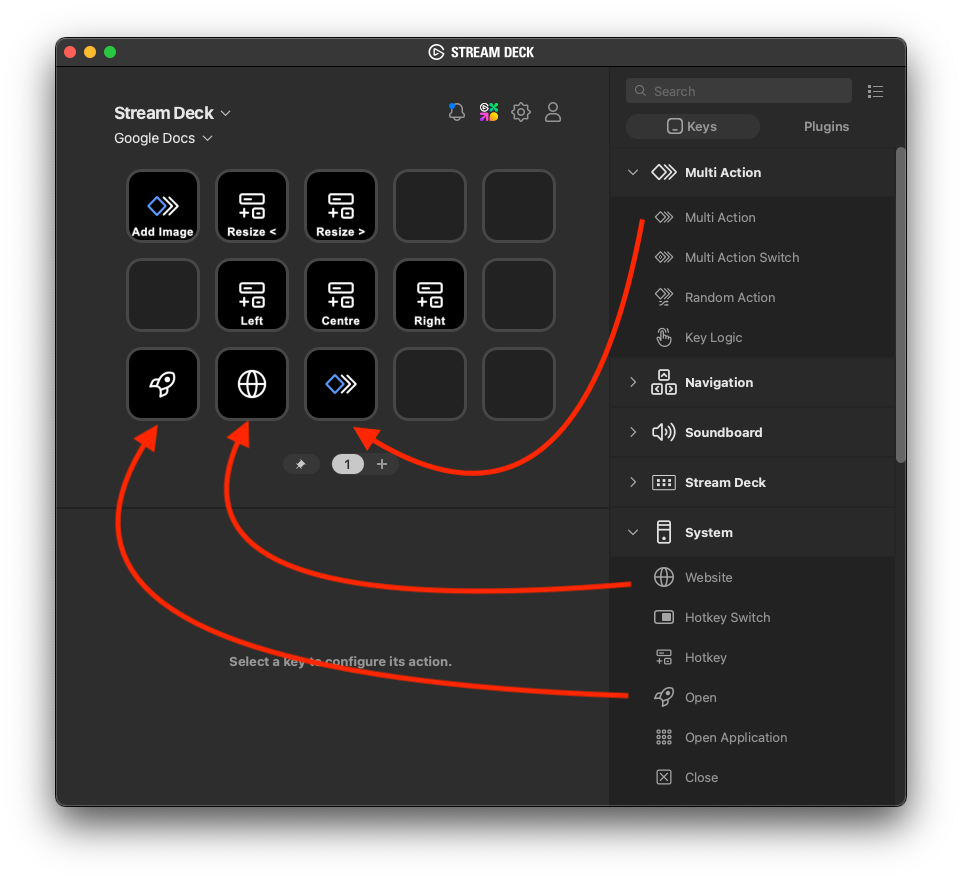
To replicate these on your own Stream Deck:
- Use the Website action to open a URL
- Use the Open action to open a specific file path
- Toggling blocks of audio tracks in Avid
- Assign keyboard shortcuts to tracks in the Command Palette
- Use a Multi-action to hit those shortcuts in groups
- E.g. CMD+1, CMD+2, CMD+3, CMD+4 would toggle A1-4.
How to edit like Joe Walker
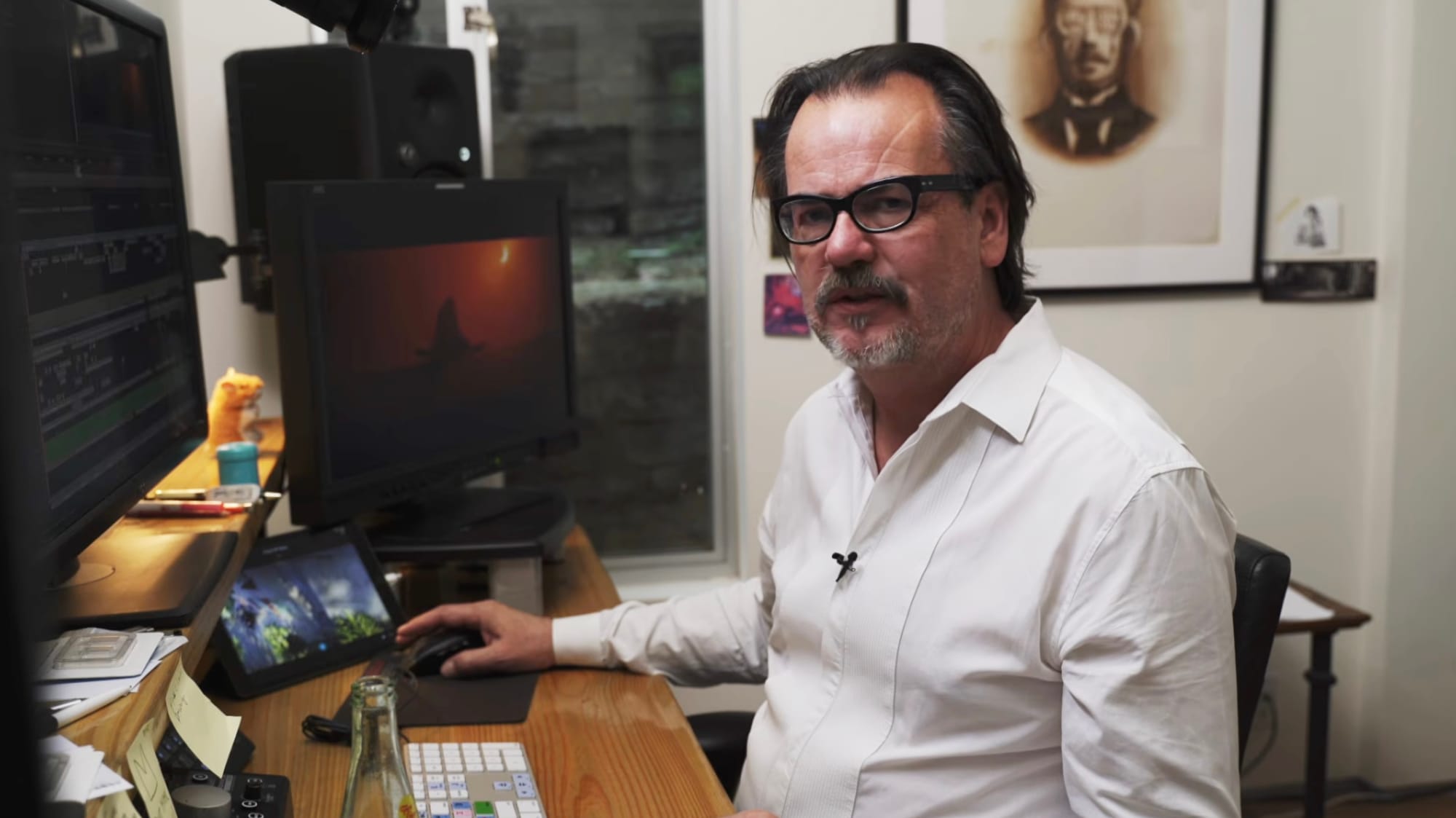
There are a few places in the conversation where Joe described his editing philosophy when it comes to deliberate creative choices around pacing, shots sizes and action.
Quick cuts
Joe uses very short sections of a shot - 8 frames, 12 frames, 30 frames etc to include a specific action - someone suddenly stands up, experiences a premonition etc. to connect two other shots which feel like the main 'meat' of what's going on.
But the addition of that fragment has an outsized impact on the moment.
There's also a fair few hidden jump cuts in the action sequences, either to connect two shots or to add a visceral edge to the violence.
Roadrunner
We used to have a picture of Roadrunner to remind us to kind of lean that way - to go towards the magnificent craziness of Chuck Jones.
We've just come out of a oner just a few minutes ago that was, you know, just over a minute, and now we're talking about eight frames to make the point.
You hold back, you create tension, and then you deliver a series of fast rhythmic punches. That's the attitude.
Hold your aces
There's a beautiful dance that you can do as an editor, which is withholding that sometimes. I mean, what plays better is a reaction and what plays better is a statement.
There's a certain power to seeing somebody say something in vision in closeup. It's a huge power. But that's the ace. And if you play aces all the time, then well, you run out of aces.
The American Cut
I never felt inhibited by having matching shots. I just went with the kind of rhythm of things. I like that three shots, effectively.
In Britain, we used to call this an American cut, but it's basically cutting down the line. Instead of cutting between matching shots, we just slam in wide, closer, close.
How to encourage your director
“The boast is that basically it didn't change from the very first time I cut it. There's maybe some tiny little changes in there, but I spent a lot of time in Hungary. It was very much towards the end of the shoot in Hungary before the main unit left to go to the desert.
I really lavished time on trying to get the fight absolutely right.
There was a lot of material. I remember my assistants had to kind of build me a string out and that string out was actually so big that I couldn't load it. There were 14 hours of material in this timeline which had to be condensed into this scene. So, there's a lot of angles.
One of the beauties of it was being able to show a director towards the end of the shoot what is very nearly the end of the film. I was really, really proud to show it to him and say, ‘We've got a really strong ending.’
And knowing where you're all going to on a 110 day shoot and knowing that the end of your film is strong — strong like this — is a great thing an editor can do to encourage the director and his team and to hopefully inspire confidence in this journey which is long.
And so Denis occasionally pays me a huge compliment of saying, ‘It works. Don't change a thing.”
So remember, play your aces sparingly and cut daily.
Take This Further
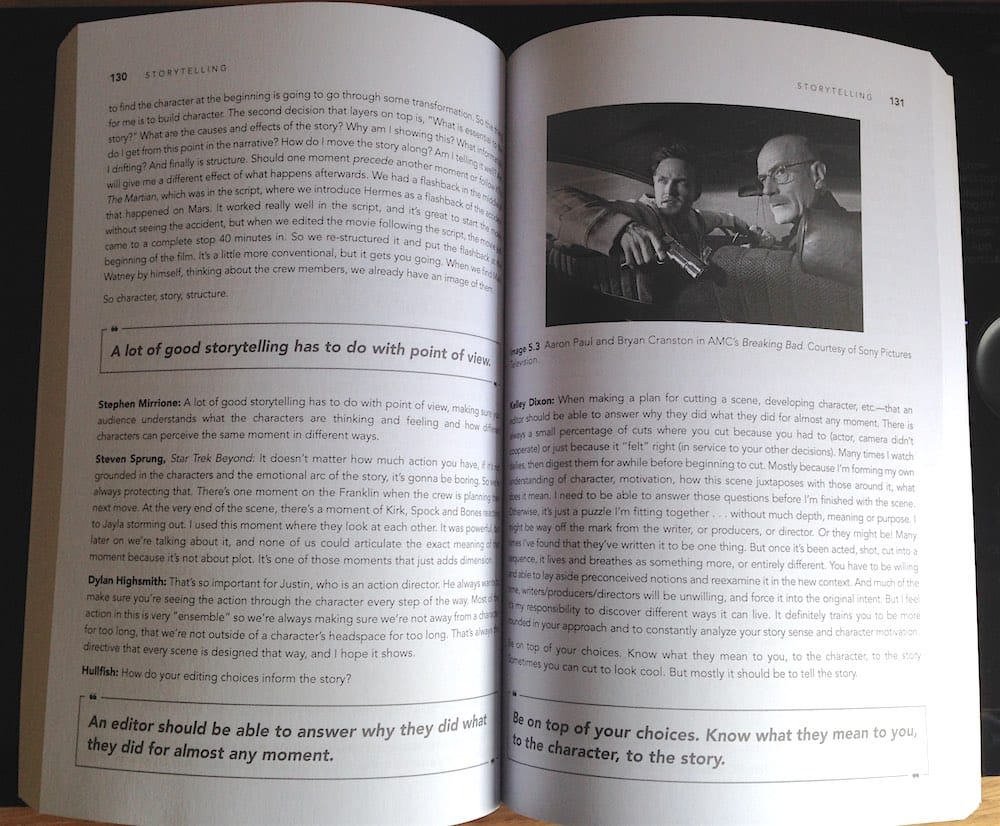
Here's every Art of The Cut interview with Joe over the years.
Steve has published two books collecting together the best of hundreds of interviews with the industry's best and brightest in The Art of The Cut and The Art of The Cut Vol. 2. Download several free bonus chapters here.
- Dune Part Two (2024)
- The Creator (2023)
- Dune Part 1 (2021)
- Dune - Video Interview - Extended Edition (2021)
- Widows (2018)
- Blade Runner 2049 (2017)
- Arrival (2016)
- Sicario (2015)
- 12 Years a Slave (2014)
Save money in Post with Cut/daily!
If you're an Avid Media Composer user, have you discovered Mimiq?
- Bin Refresh for non-Nexis users
- Turn any SAN, RAID or NAS into a Media Composer-compatible volume.
- NEXIS Coexistence enables any type of storage to work with a NEXIS.
Another subscription? Nope.
All Hedge prices are for perpetual licenses with 1 year of updates.
Save 10% on any product with the exclusive discount code: "jonnyelwyn"