
#518 – Cut/daily Meets... Editor Greg O'Bryant
I really enjoyed watching tuner, the performances are fantastic, the pacing from Editor Greg O'Bryant is slick and the sound design evokes a vivid reality.
It's also the kind of film where the editing both stands front and centre - lots of great montages! - and fades into the background supporting all of the really compelling performances.
Everything great editing should do.
My favourite thing Greg had to share?
The movie is never going to be finished until the last day, and that all of the effort that goes into perfecting the micro facets of the cut before it’s truly time to do so can cause me to be rigid, rather than open to new possibilities.
I’ve learned to stay macro for as long as possible before moving to the micro only after we’ve really found the movie we’re going to finish.
– Editor Greg O'Bryant
tuner Bonus questions
The film is a masterclass in cutting montages. The safe cracking, piano tuning, van driving, etc. How do you approach organising and cutting a montage from start to finish? How do you tighten them up? How do you know when to stop? How did you make each one feel unique?
First of all, thank you for the incredible compliment!
Being a documentarian, Daniel (Director Daniel Roher) approached many of these montages as “collecting footage” to be shaped later - but there were very specific beats we had to hit.
Finding the balance between the the aesthetics of a montage with the emotional aggregate of how it feels to the audience within the context of the movie is something that takes time, patience and incredible care.
I have found that prioritizing that emotional element first works best for me, and once that is working - it’s easier to find the right connections and juxtapositions in the visuals and sound to make it sing.
I also follow the music pretty closely which helps dictate the rhythm. With tuner we wanted each one to express a different subjective emotion to Niki; “day in the life”, “falling in love”, “mourning” or “feeling trapped / in peril” for example.
Prioritizing the emotion is a great shortcut to making them feel distinct.
Director Daniel Roher has worked with a lot of different editors. This is your first time working with him. How did you get the job? Is it different working with a director who uses so many different editors on different projects vs working with someone you always cut for?
I was sent the tuner script and subsequently met daniel via my agents at UTA. It was his first scripted film after several successful documentaries, so we were able to build a workflow that was bespoke to the film and different than any way either of us had previoulsy worked.
Even with filmmakers I collaborate with regularly, I find that discovering a new and unique approach to working that fits the specific project makes things easier than bringing preconceptions to the film.
No credit card required. Learn more here...
Both sound design and needle drops are a huge part of the film. How did you work with sound designer Johnnie Burn on finding that sound? Did you create offline effects, did he send a sample library, did you have to wait for that all to come in (a bit like a VFX) - what was the process of creating that aspect of the film?
Johnnie is an incredibly busy man - so we worked mostly in offline other than brief windows during the edit where we’d have access to him to discuss how our ideas about the use of sound were evolving.
The complex and hyper-specific architecture of the design was all built by Daniel and I during the edit and most of our discussions with Johnnie during offline were about the sounds of the safes and the different “ear povs” — what it would sound like with full muffs, just earplugs and “naked”.
It was an incredilbe gift to know we had someone as talented and creative as Johnnie - because as any editor will understand, trying to sell big ideas to producers, other departments, etc. with only offline tools can be very difficult.
We spent a lot of time asking everyone to trust us and once we stepped onto the mix stage we all shared a collective sigh of relief.
What are your reflections on this quote from Daniel about the genre balance in the editing process?
Rahul: The film has a fascinating relationship with genre. It starts as something lightly comic and observational, then morphs into a thriller, while still holding onto warmth and even romance. What were the key tonal rules you gave yourself so the movie could keep shape-shifting without losing its identity?
Daniel: The tonal shifts were the biggest challenges of the film. I didn't know if we could pull it off. I was nervous about it. When we started editing, we really had to find the right rhythm and tonal fluency throughout the whole movie, and that required massaging. Greg O'Bryant, the film's editor, was invaluable in helping us find that right rhythm and keep the tone consistent. How could you have a lighthearted buddy film with Dustin Hoffman and Leo Woodall, and then in the same movie a gun goes off and someone's head gets blown up? How do you hold those two elements together? That was a real challenge, and ultimately I think we really figured it out.
I am constantly grateful to Daniel, who has been so kind and creatively generous throughout tuner - he truly is a treasure.
I had similar reservations about the tonal shifts, and what I found in assembling the film the first time, was that staying incredibly subjective to Niki for the whole film was a way to “hack” these shifts (as humans, we all have tonal shifts throughout our lives).
This made sense to me because the very nature of “hearing the world as Niki hears it” lends itself to this approach. What I think I brought to the table was a desire to push subjectivity as far as we could, even up to omitting scenes Niki wasn’t in.
I think building a story around an everyday guy with a disability who finds himself in extraordinary circumstances, makes it easier for the audience to find themselves in these circumstances with him and feel those shifts (rather than needing to understand or process those shifts).
Again, I believe filmmaking is about expressing emotion, so keeping us with Niki across these shifts helps with the tonal transitions. For example, the score is always meant to express Niki’s inner POV, the needle drops are all songs that he would listen to, or that mean something to him.
The sound design is literally hearing the world as he hears it.
Cut/daily has bills to pay! $480 for Ghost Pro's annual renewal.
Please invest less than one hour of your daily rate — $60/year — to keep more than five years of post-production insights freely available to everyone.
Become a regular Cut/daily Benefactor with complete access to the Archive, or drop a one-time contribution of any amount.
And sincerely, thank you!
What’s your daily work routine?
During production - i prioritize assembling everything that was shot the previous day. for me, it’s important to get the scenes onto their feet, so i can start thinking about the dailies in the context of the film. i then hand those assemblies off to my AE (marc carlini) to clean up the production audio and add the practical sound effects. this takes about 1/2 of my day - the other half of the day, i spend finessing the scenes that marc has previously prepped and eventually building the scenes into sequences and starting to temp score.
once the director is back, it’s really up to him/her what we work on - but typically i start an hour before they arrive and wrap about an hour after. usually, it’s about a 10 hour day. once the film evolves into it’s late stages and we start to do spottings and reviews - i will schedule anything other than editing for before lunch, so that after lunch i can edit without interruption for the remainder of the day.
What do you now know about your work that you wish you’d known when you first started?
That the movie is never going to be finished until the last day, and that all of the effort that goes into perfecting the micro facets of the cut before it’s truly time to do so can cause me to be rigid, rather than open to new possibilities.
I’ve learned to stay macro for as long as possible before moving to the micro only after we’ve really found the movie we’re going to finish.
What did your biggest professional failure teach you?
That my editing fingers should not be allowed anywhere near a broad comedy.
What’s the #1 thing that has helped you shorten your craft’s learning curve?
I am still and will always be learning about storytelling and interrogating my process to make it bespoke for each filmmaker/project, and what makes that possible is consciously striving to remain open and fighting against rigidity.
Just because something worked on the last project doesn’t mean it’s right for the next thing.
What book has helped you the most over your career?
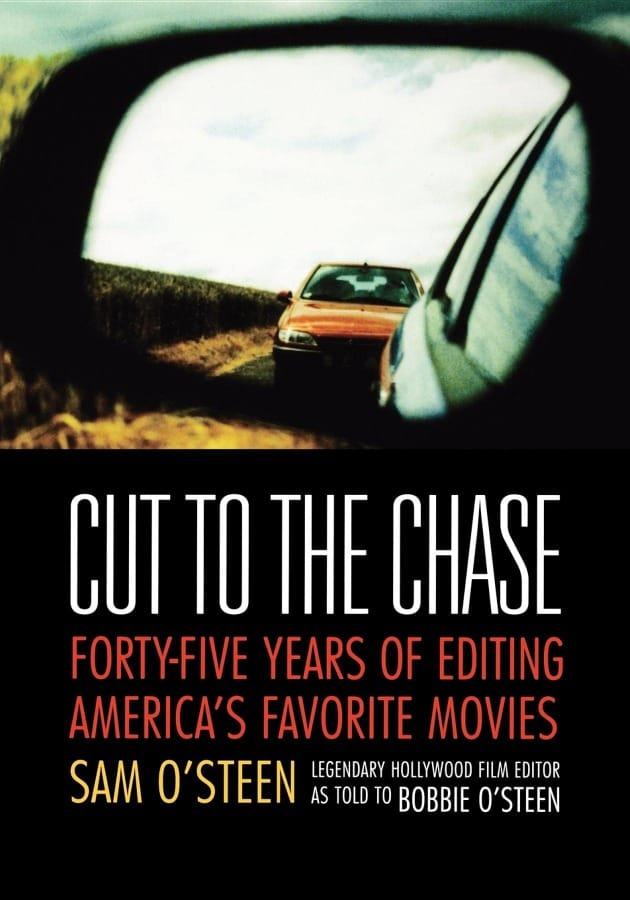
Cut To The Chase by Sam and Bobbie O’steen.
And your parting piece of advice?
Never build your first cut around “solving” the worst aspects you inherited from production. Instead, try to prioritize using the camera language to build an editing grammar that’s right for the project.
This way you are working from the best stuff first… problems can and will come later - and having a strong and clear grammar/language for the film will actually go a long way to helping solve them.
Thanks so much Greg!
So remember, stay macro for a long as possible and cut daily.
PS – Can you help shape the next Cut/daily training course?
I've been pulling together a ton of research for Cut/daily's next email-based training course on AI workflows in Post.
But I'd love to hear how you're using AI today, how you're struggling with the results and where you'd most appreciate some professional input.
As an incentive, there's also a special thank you for everyone who completes this super quick survey.
Save money in Post with Cut/daily!
Limited-time deal! Get 50% ($199) off Topaz Studio!
Pay for a year of Topaz Studio (their everything bundle) and get 50% off industry-leading:
- Upscaling
- Sharpening
- Denoising
- Restoration
- Stabilisation
- Slow mo
Topaz's suite of apps transforms “This is unusable” to “How did you do that?!”
Topaz Studio is worth every penny when you really, really need to use that shot and having all their tools at your finger tips means you can save almost every shot.
*You'll need Topaz Studio Pro if your business generates $1m in annual revenue.
(Sadly, that's not me.)