
#510 – Cut/daily Meets... Editors Claire Simpson and Sam Restivo
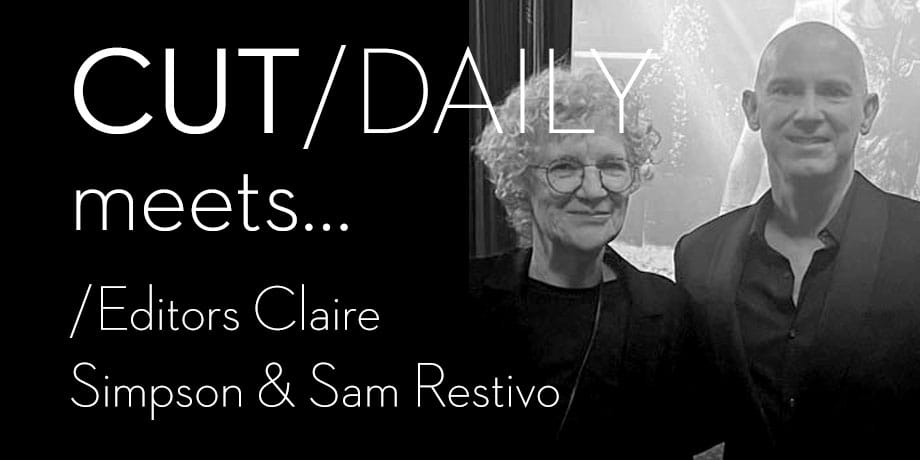
I'm not going to lie, I'm a huge fan of Editor Claire Simpson's work on an Oscar nominated film she made 20 years ago, and one which I feel she should have won* the award for!
So it was a real delight to get to interview Claire and her co-editor of their past 5 films, Sam Restivo, in this extended edition of Cut/daily Meets...
Claire and Sam have worked together on six projects for Director Ridley Scott in the past 7 years, including:
- Raised by Wolves (TV series)
- The Last Duel
- The House of Gucci
- Napoleon
- Gladiator II
- The Dog Stars
Their latest collaboration is The Dog Stars which comes out today!
My favourite thing they had to share? Sam's parting piece of advice.
For editing, never give up on the footage. Always be open to a different way to tell the story.
And once the decision has been made, take comfort in the ability to simply move on to the next one.
— Editor Sam Restivo
*Claire has an Oscar for her work on Platoon (1987) and two BAFTA awards for Platoon and The Constant Gardener.
But first...
Nearly a decade ago I started a random project to create a “Game show for editors” called Name That Editor, in which I cut together a career montage from start to finish (or, at least, present day) of one editor's work and then you had to (you guessed it) name that editor before the time was up.
The second episode featured (spoiler) Editor Claire Simpson, whose work on The Constant Gardener I'm still in awe of...
As an editor The Constant Gardener is one of my all time favourite films because of the way the edit so beautifully unravels the story.
20 years later I wondered if you had any reflections on it?
SAM: This question isn't for me, but I'm going to weigh in and say I strongly agree with your take on Claire's work! Such a great film.
CLAIRE: The Constant Gardener is based on the Le Carre novel of the same name. It is a thriller of international intrigue, corporate corruption and malfeasance, murder and Government cover up. The story has a wide canvas covering Europe and Sub Saharan Africa most specifically Kenya.
But most of all it is a love story of great profundity.
After shooting, a 3+ hour assembly was screened for the director and producer, who wisely fell asleep half way through. My assistant followed shortly thereafter and the director, Fernando Meirelles flirted with slumber but valiantly fought it off.
It was a painful and humiliating experience.
In my defense, it was the first time anyone had screened the film all the way through, including myself. I had assembled the film according to the shooting script and there were the usual bumps along the way but the script had taken a linear approach to the narrative and while that can work well, in this case it worked against the narrative thrust of the story telling.
I had committed a horrible editorial crime: the plot was plodding!
Consequently the brilliant performances of Ralph Fiennes as Justin and Rachel Weiss as his wife, Tessa, were not showcased with the same passion and drive that the characters deserved.
I was ashamed. I went back to the source. The novel is beautifully written. Le Carre wrote with fire in his belly. He knew well the woman that Tessa’s character was based on and didn’t believe for a minute that her death was accidental.
He meticulously researched the pharmaceutical companies experimenting with drugs in Africa. He was angry and determined to expose the malfeasance of “Big Pharma”. I had to capture the same passion. I knew it was there in the performances so I reconstructed the story as Le Carre had written it.
Instead of the linear format, Tessa’s story is told retrospectively through fragments of memory. Ghost like, she haunts the fabric of the narrative and with each recovered memory the pace escalates. Justin, catatonic in grief, is tormented by the possibility of Tessa’s betrayal, but with every recovered memory he is determined to uncover the truth about Tessa’s work and the nature of their relationship.
He chips away at the falsehoods, the intrigue and the conspiracies in a tantalizing journey through continents. In the process the true nature of their love story is vividly and hauntingly portrayed, amplified by Alberto Iglesias’ astonishing score, melancholic and chaotic in equal measure. Cesar Chalone’s hand held camera work also added to the urgency of the pursuit.
As you might have noticed, I love Le Carre’s novel. I had read it feverishly from cover to cover as I lay in bed with flu one Christmas. I was determined to do it justice. When the film was released David Cornwell aka John Le Carre sent me a note expressing “emotion and gratitude”.
It is one of my most treasured possessions!